
Ryan Williams Embraces India Roots by Renouncing Australian Passport
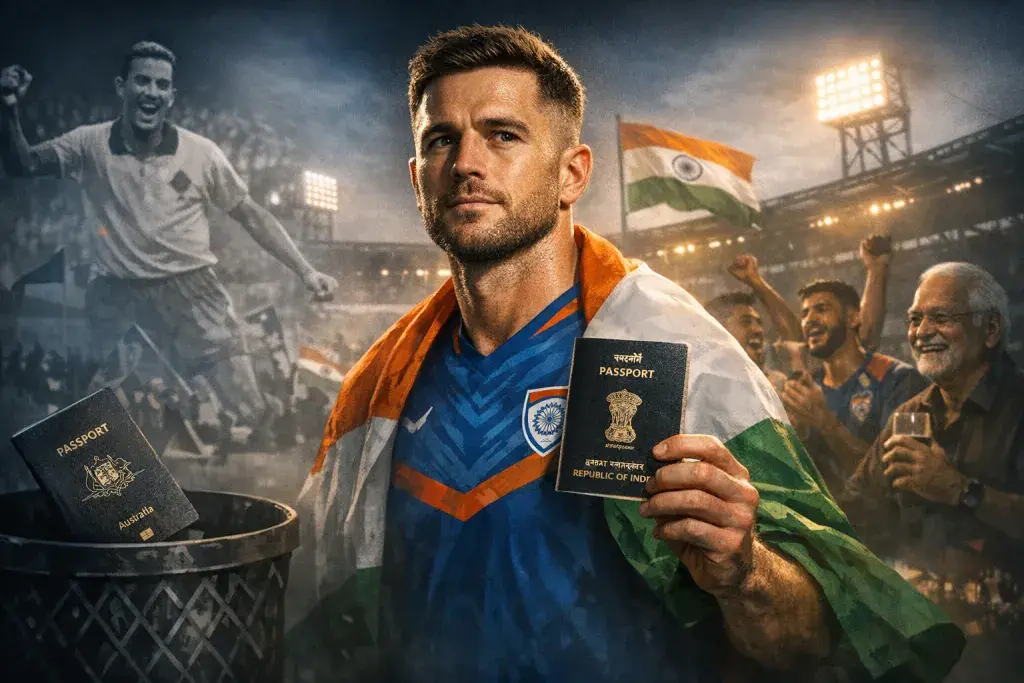
Authored by pokerbetonlineaustralia.com, 17/04/2026
Ryan Williams, a 32-year-old midfielder born in Australia, has relinquished his foreign citizenship to represent India on the international stage—the first such case in over a decade. His decision stems from deep family ties to Indian football heritage, overriding the gap between Australia's advanced program and India's developing one. In a recent interview with The Indian Express in Kochi, he chuckled about struggling to learn Hindi amid team communications, highlighting his rapid integration despite linguistic hurdles.
Family Legacy Fuels Unconventional Path
Williams hails from a lineage steeped in football across continents. His grandfather Linky Grostate delivered the decisive goal for Mumbai in the 1956 Santosh Trophy semi-final against Bengal, embedding early Indian connections. His mother Audrey competed for Western Australia after relocating there in 1974, while father Eric pursued a semi-professional career and later coached in Myanmar and Malaysia. Brother Rhys earned 14 caps for Australia after youth stints with Wales, and twin Aryn appeared for Imphal's NEROCA FC in the I-League from 2017 to 2019. This heritage propelled Williams to forfeit his Australian passport, navigating bureaucratic and personal challenges he described as "beating through the bushes" to secure eligibility.
Overcoming Barriers in a Multilingual Environment
Within India's national setup, Hindi dominates conversations, contrasting with the more English-friendly atmosphere at his Bengaluru FC club. Williams picks up phrases and grasps conversation gist, yet admits difficulty when head coach Khalid Jamil addresses the group in Hindi before checking his comprehension. "No, I should learn, really, but it’s difficult," he said with a laugh, pledging to improve. His on-field fluency—evident from an early goal in a 2-1 win over Hong Kong in Kochi last month—demonstrates that shared professional instincts bridge gaps faster than verbal language, fostering team cohesion.
Club Rivalries Yield to National Unity
Kochi, base of Kerala Blasters, hosts fierce rivalries with Bengaluru FC, where Williams aligns alongside Sunil Chhetri. Past visits brought hostility and humidity, but national duty shifted dynamics: local fans set aside allegiances to cheer him equally. "For them to put everything aside and put India forward was really special," he noted, feeling genuinely welcomed. This goodwill underscores broader cultural patterns in India, where national representation often transcends regional divides, strengthening collective identity.
Long-Term Commitment Amid Ambitious Horizons
A "live for the moment" personality, Williams harbors no regrets about switching nationalities, driven by international aspirations and family significance. India's failure to qualify for the 2027 AFC Asian Cup points to 2031 as the next viable target, when he turns 37. Yet familial pride—resonating with grandparents, mother, and cousins—amplifies the choice's meaning. His journey reflects migration patterns in global football, where personal heritage and opportunity prompt bold nationality shifts, potentially inspiring others to bolster emerging national programs.